Start your free trial
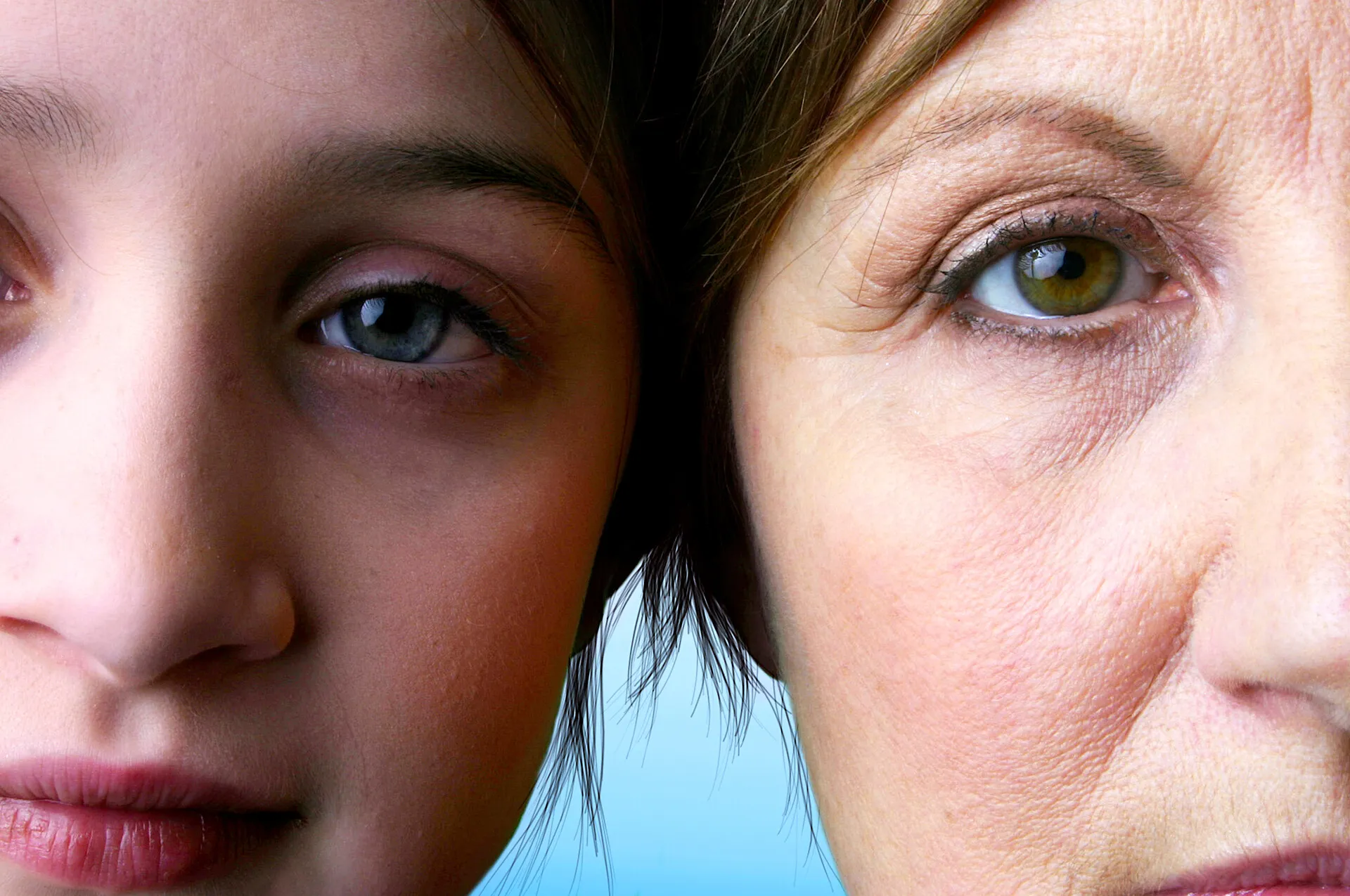
A young girl's face beside an older woman's

Women's health: womb to wisdom

The story of a woman's body is a lifelong marvel — an evolving masterpiece shaped by biology, environment and time. At every stage it carries a dual narrative: the wonder of the female body, and the conditions that may arise along the way.

In utero to older age

The female life course, stage by stage

The marvel and the pathology of each of eight life stages, side by side.

Biology that society has long misread as pathology — menstruation, menopause — is in fact elegant, evolved design.

  1. Embryonic & fetal development

    Every egg she will ever have is present before she is born.

    The marvel

    Around week 6, two X chromosomes set the female blueprint and the ovaries begin to form; by about week 10 the Müllerian ducts — the foundation of the uterus, fallopian tubes and upper vagina — are laid down. The egg supply arcs from a peak of about 6 to 7 million at about 20 weeks, to about 1 to 2 million at birth, to about 300,000 to 400,000 by puberty.

    • The ovaries form
    • The Müllerian ducts are laid down
    • The egg supply peaks
    • Every egg present at birth

    What to know

    Turner syndrome and other differences of sex development; Müllerian anomalies affecting the reproductive tract; prenatal exposures.
  2. Infancy & toddlerhood

    The brain nearly triples in size.

    The marvel

    The brain nearly triples in size; language and the first motor skills emerge, alongside an early surge in social and emotional development. A transient “mini-puberty” of infancy briefly activates hormones that shape what comes later.

    • Brain growth
    • Language emerges
    • First motor skills
    • Mini-puberty

    What to know

    Turner syndrome is often first identified here; congenital urogenital anomalies; early growth and endocrine disorders.

  3. Childhood

    Thinking, identity and strength take shape.

    The marvel

    Abstract thinking, problem-solving and the first sense of identity take shape, with steady refinement of fine and gross motor coordination and strength. Rising adrenal androgens (adrenarche) begin the earliest physical changes.

    • Abstract thinking
    • A first sense of identity
    • Coordination and strength
    • Adrenarche begins

    What to know

    Precocious puberty (onset before age 8), which needs both medical and emotional support; growth disorders; the first mental-health needs, such as anxiety.

  4. Adolescence & puberty

    Estradiol drives the changes of puberty.

    The marvel

    Estradiol drives the secondary sex characteristics — breast development, widening hips, changes in skin and hair — and reproductive maturation. Menarche typically arrives around 12 to 13, and the menstrual cycle begins.

    • Breast development
    • Changes in skin and hair
    • Menarche
    • The menstrual cycle begins

    What to know

    Painful, heavy or irregular periods; PCOS onset; body-image pressure, eating disorders, anxiety and depression.

  5. Adulthood & sexual maturation

    The physical prime, when fertility is highest.

    The marvel

    Muscle mass, bone density and cardiovascular function peak, and fertility is highest. Sexual anatomy of astonishing complexity: the clitoris carries at least about 10,281 nerve fibers in the dorsal nerve alone, first measured in 2022, with the true total higher still.

    • Muscle and bone peak
    • Cardiovascular function peaks
    • Fertility is highest
    • Sexual health

    What to know

    Fertility begins a slow decline after about 35; breast-cancer risk rises incrementally; endometriosis, fibroids and PCOS; thyroid and autoimmune conditions, which fall disproportionately on women.

  6. Preconception & pregnancy

    Not a single stage, but a capacity that overlaps the reproductive years.

    The marvel

    The body becomes “a walking immunological, digestive and cardiovascular system for two.” Blood volume rises 30 to 50% and cardiac output climbs; immunity and metabolism adapt to protect the fetus. Relaxin and prostaglandins prepare for birth; prolactin and oxytocin support lactation and bonding.

    • Blood volume rises
    • Cardiac output climbs
    • Immunity and metabolism adapt
    • Lactation and bonding

    What to know

    Infertility and subfertility; gestational diabetes, preeclampsia, hemorrhage and preterm birth; miscarriage and loss; and the postpartum recovery arc, including postpartum depression.

  7. Perimenopause & menopause

    A change, not a disease.

    The marvel

    The body recalibrates hormonally over years, with menopause at about 51, and the transition can be a redefinition of self — freed from reproduction and full of renewed possibility.

    • Hormonal recalibration
    • Menopause at about 51
    • A redefinition of self
    • Renewed possibility

    What to know

    Irregular cycles, hot flashes, and sleep and mood shifts; estrogen decline accelerates bone loss toward osteoporosis; cardiovascular risk and genitourinary symptoms rise.

  8. Postmenopause & advanced age

    Often the freest and most fulfilling years.

    The marvel

    Energy is redirected to creativity, mentorship and accumulated wisdom. “Womb to wisdom”: resilience, perspective and grace.

    • Creativity
    • Mentorship
    • Accumulated wisdom
    • Resilience and perspective

    What to know

    Osteoporosis and fragility fractures; heart disease, the leading cause of death in women; a rising dementia burden; and pelvic-floor disorders.

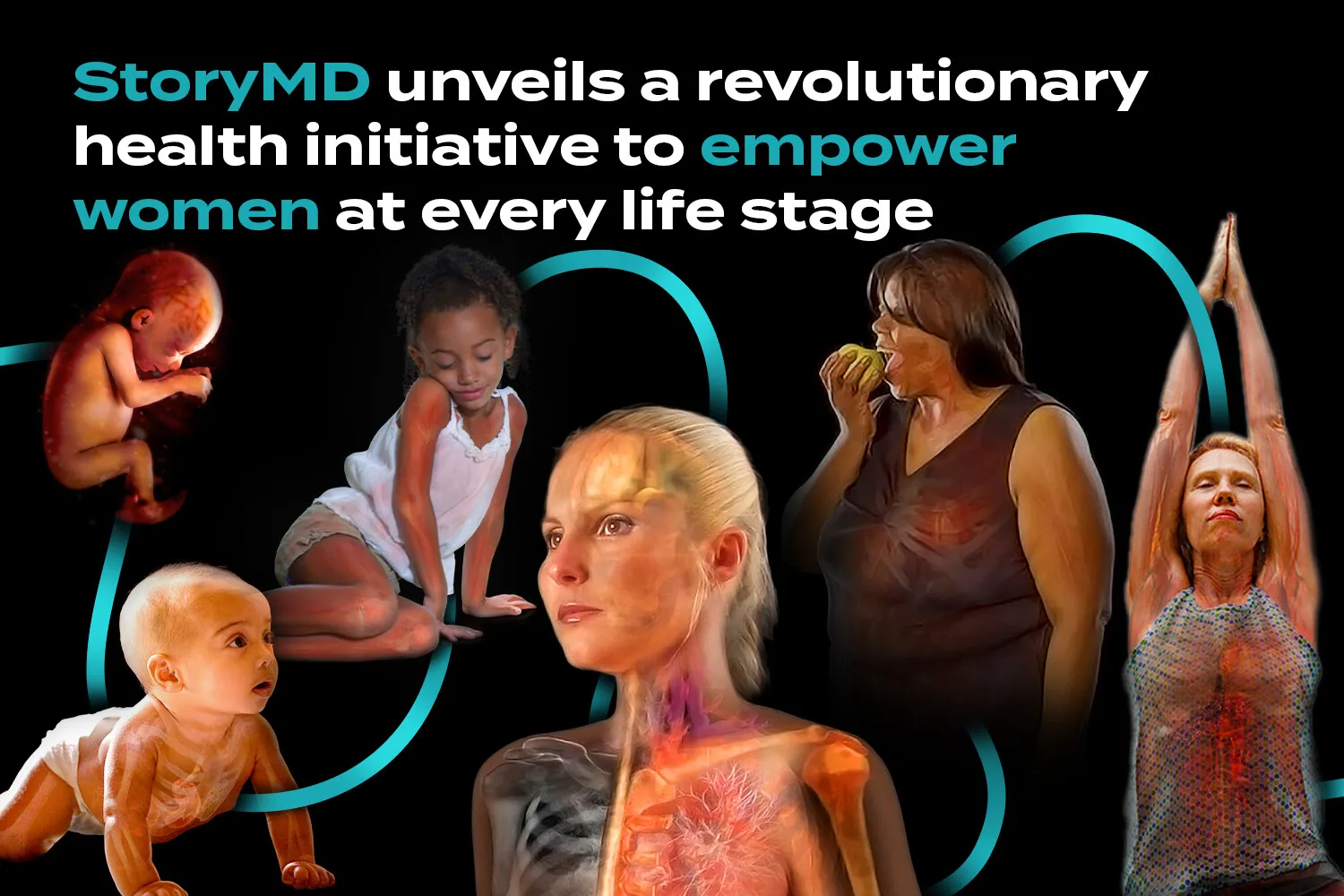
A woman's life stages, from a fetus and a baby to a girl, a young woman and an older woman, under the words “StoryMD unveils a revolutionary health initiative to empower women at every life stage”
Womb to wisdom

Each chapter a marvel and a reckoning, side by side.

From the first spark of conception to the resilience of old age — a woman as the protagonist of one of biology's most profound stories.

Explore in the library