Start your free trial
A mother nursing her newborn

Postpartum care: the fourth trimester

Birth is not the finish line — it's the start of recovery. In the weeks and months that follow, a mother's body heals, her mind adjusts, and a new bond takes root. This is the postpartum timeline: what's happening, and the care that carries you through it.

Birth to the first birthday

The first year, phase by phase

Every phase carries two stories at once: the quiet work of a body putting itself back together, and the care that helps it happen safely.

StoryMD follows the whole first year in each of these.

  • Physical recovery
  • Emotions
  • Feeding
  • Care
  • Warning signs
  1. The first hours

    Recovery begins the moment your baby arrives.

    The recovery

    The uterus starts to contract back toward its pre-pregnancy size — you may feel these “afterpains,” especially while nursing. Bright-red bleeding (lochia) begins, and your care team monitors your blood pressure, bleeding and that first latch. Skin-to-skin contact in this “golden hour” helps regulate your baby's temperature and heartbeat and sparks your first feeding.

    • Skin-to-skin
    • First latch
    • Afterpains
    • Lochia begins

    What to know

    Rest, hydrate, and let your team manage pain. Hold your baby skin-to-skin and start breastfeeding early if that's your plan — colostrum is all a newborn needs at first. Ask for help; you should not be lifting or straining. Tell your nurse right away about heavy bleeding, dizziness or a headache that won't ease.


  2. The first week

    Your milk comes in as you and your baby learn each other.

    The recovery

    Your milk typically “comes in” around days three to five, and breasts may feel full, firm and tender (engorgement). Bleeding slowly shifts from bright red toward pink-brown. A vaginal birth may leave the perineum sore; a cesarean incision needs gentle care as it heals. Sleep arrives in fragments.

    • Milk comes in
    • Engorgement
    • Perineal care
    • Incision care

    What to know

    Treat recovery as the priority it is. Keep up frequent feeding to ease engorgement and build supply, use warmth or cold for comfort, and keep perineal or incision care simple and clean. Nap when the baby naps, accept meals and help, and stay ahead of pain. Call your provider for a fever, spreading redness, foul-smelling discharge, or a hot, painful area on the breast.

  3. Mind and mood

    The baby blues are common, and they usually pass.

    The recovery

    As many as 80% of new mothers feel waves of sadness, irritability, anxiety and tearfulness in the first days and weeks — the “baby blues.” They usually peak within a week and ease by about two weeks as hormones settle and bleeding tapers. When low mood, hopelessness or anxiety last longer or deepen, that can signal postpartum depression, which affects roughly 1 in 7 mothers.

    • Baby blues
    • PPD screening
    • Support network
    • Health equity

    What to know

    If sadness or anxiety lasts beyond two weeks, interferes with caring for yourself or your baby, or brings frightening thoughts, reach out to your provider — postpartum depression is common and treatable. Mothers of color experience PPD at roughly twice the rate of white mothers yet are less likely to be screened or treated, so advocate and ask directly for support.

  4. The postpartum visit

    A full check of your recovery, not a formality.

    The recovery

    By about six weeks the uterus has usually returned to its pre-pregnancy size and lochia has ended for most. This milestone visit checks physical healing, mood, and the conditions that pregnancy can surface. Weight settles slowly: around 75% of people who gained the recommended amount hold on to roughly two to five pounds, and that's normal.

    • 6-week checkup
    • Contraception
    • Cleared for activity
    • Body image

    What to know

    Expect a comprehensive check: healing of the perineum or incision, blood pressure, mood screening, contraception, breastfeeding and any ongoing condition. Ask every question you've been saving. Ignore social-media “bounce-back” timelines — recovery is measured in months, not posts.

  5. The fourth trimester

    Twelve weeks of profound adjustment.

    The recovery

    The “fourth trimester” is the roughly twelve weeks of profound adjustment after birth. Hormones continue to shift, breastfeeding becomes more established as the let-down reflex settles into rhythm, and the pelvic floor and core slowly rebuild. Sleep is still broken, and identity is reshaping alongside the body.

    • Let-down reflex
    • Lactation support
    • Pelvic floor
    • Gradual return

    What to know

    Let breastfeeding find its rhythm and ask for lactation help early if it hurts or feels off. Begin gentle pelvic-floor and core work as your provider clears it, and return to activity gradually. Keep watching your mood — postpartum depression can begin at any point in the first year, not only in the early weeks.

  6. The long arc of recovery

    Full recovery unfolds across the first year.

    The recovery

    Strength and stamina return, weight comes off gradually rather than on any fixed schedule, and the bond with your baby deepens as routines take shape. Many women also navigate a shift in identity and relationships that deserves as much patience as the physical healing.

    • Gradual recovery
    • Nutrition
    • Movement
    • Bonding

    What to know

    Think slow and steady: nourishing food, movement you enjoy, and sleep wherever you can find it beat any crash plan. Keep mental health on the radar through the whole year and keep your own check-ups. Caring for yourself is part of caring for your baby — not a trade-off against it.

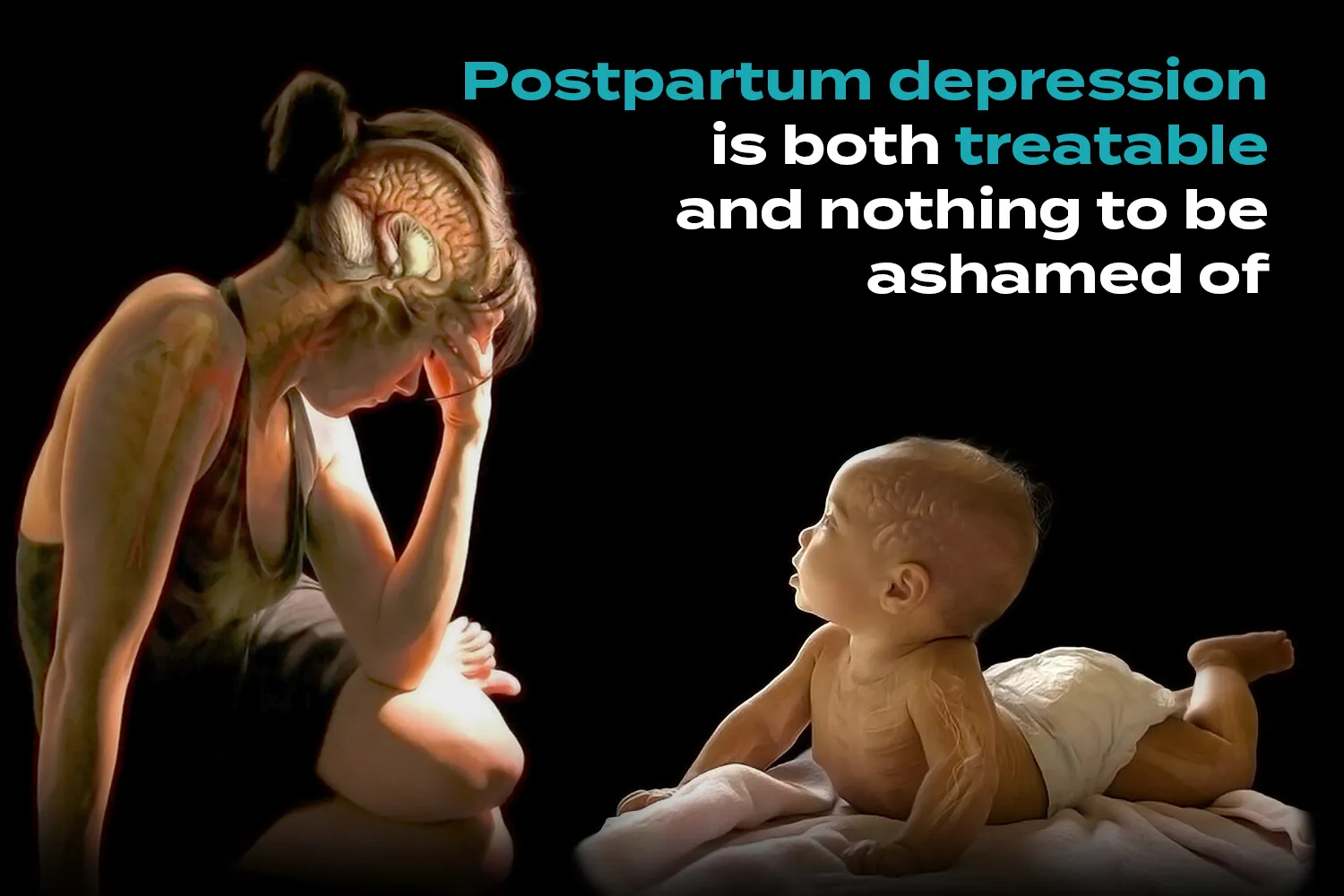
A mother with her head in her hand as her baby looks up at her, under the words “Postpartum depression is both treatable and nothing to be ashamed of”
The fourth trimester

The mother needs care too.

Caring for the mother is not separate from caring for her family — it is the same work.

Explore in the library